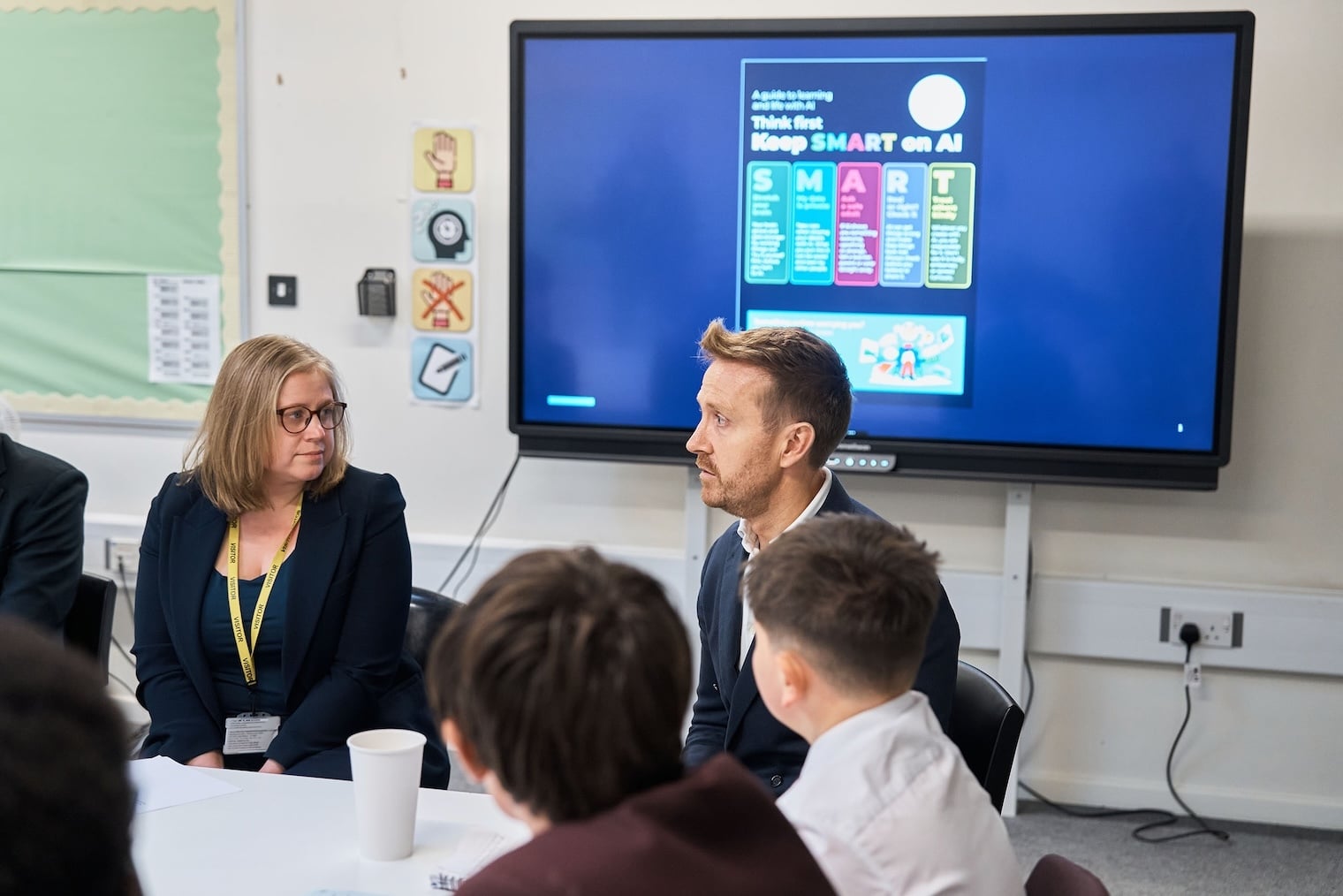
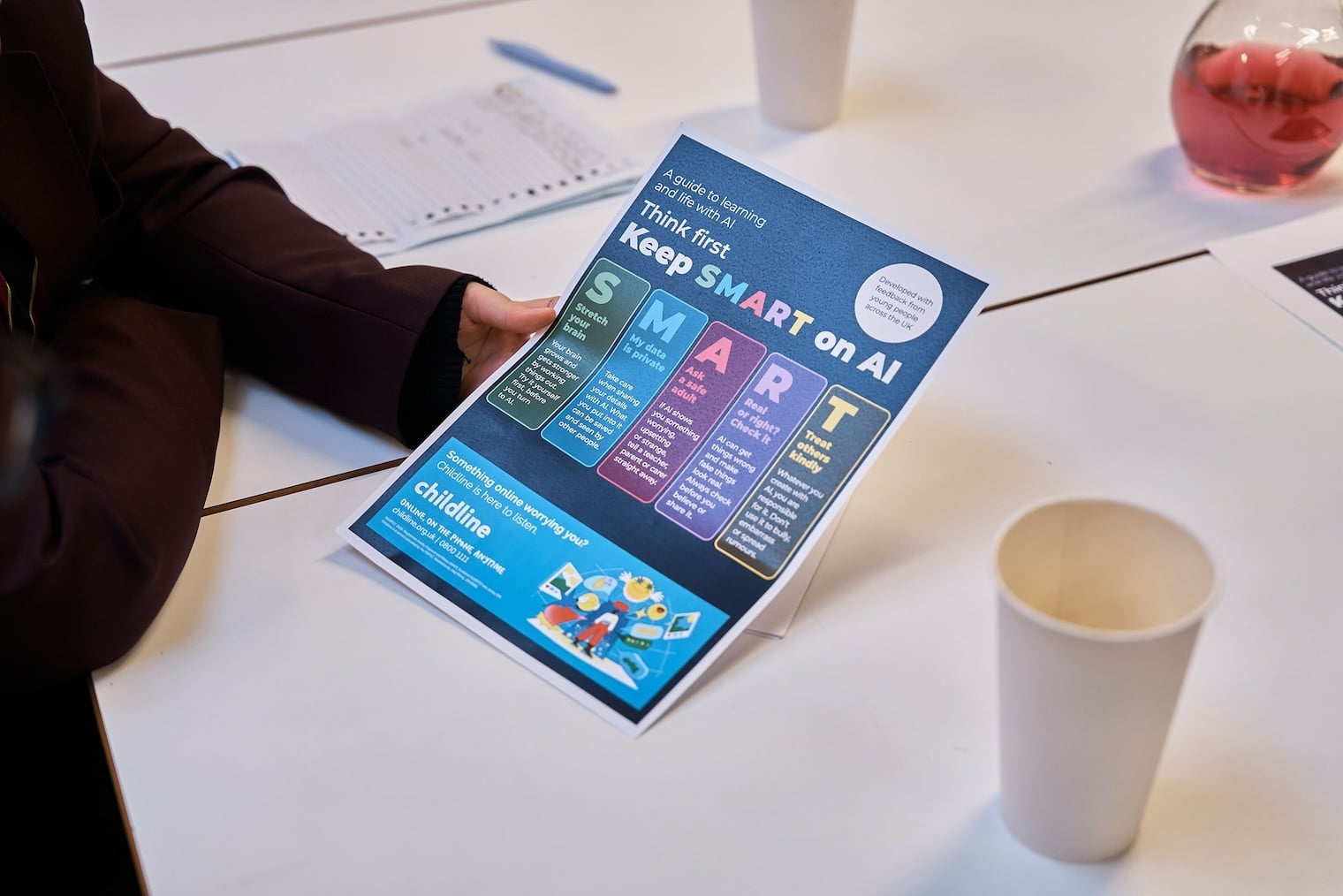
Leading a team of 30 teachers and developing a teaching pack for an AI safety campaign, Ms Jarmy has been supporting the initiative, Think First. Keep SMART on AI, that is now being rolled out to 33,000 schools across the UK.
With support from the NSPCC, the campaign aims to help children aged eight to 18 explore artificial intelligence confidently and responsibly, while developing the critical thinking skills to use it safely.
Bringing together a classroom poster, an assembly and a forthcoming teacher pack, Ms Jarmy has led work on the pack, which is due to follow early in the new year and will complement the poster and assembly resources.
We are delighted to be a part of this national, collaborative initiative, shaped by children and young people, helping schools respond to the growing use of AI.
Ms Jarmy explained: “Children are already using AI, in and out of the classroom. Our job is to help them become thoughtful, critical users, not passive ones. The SMART habits give teachers a simple, memorable way to start that conversation.”
Described by its creators as a “Green Cross Code, but for AI”, the campaign began around the kitchen table with AI expert Jonathan Kewley and his two children, aged nine and 10. Their poster has since been shaped by feedback from 3,000 young people.
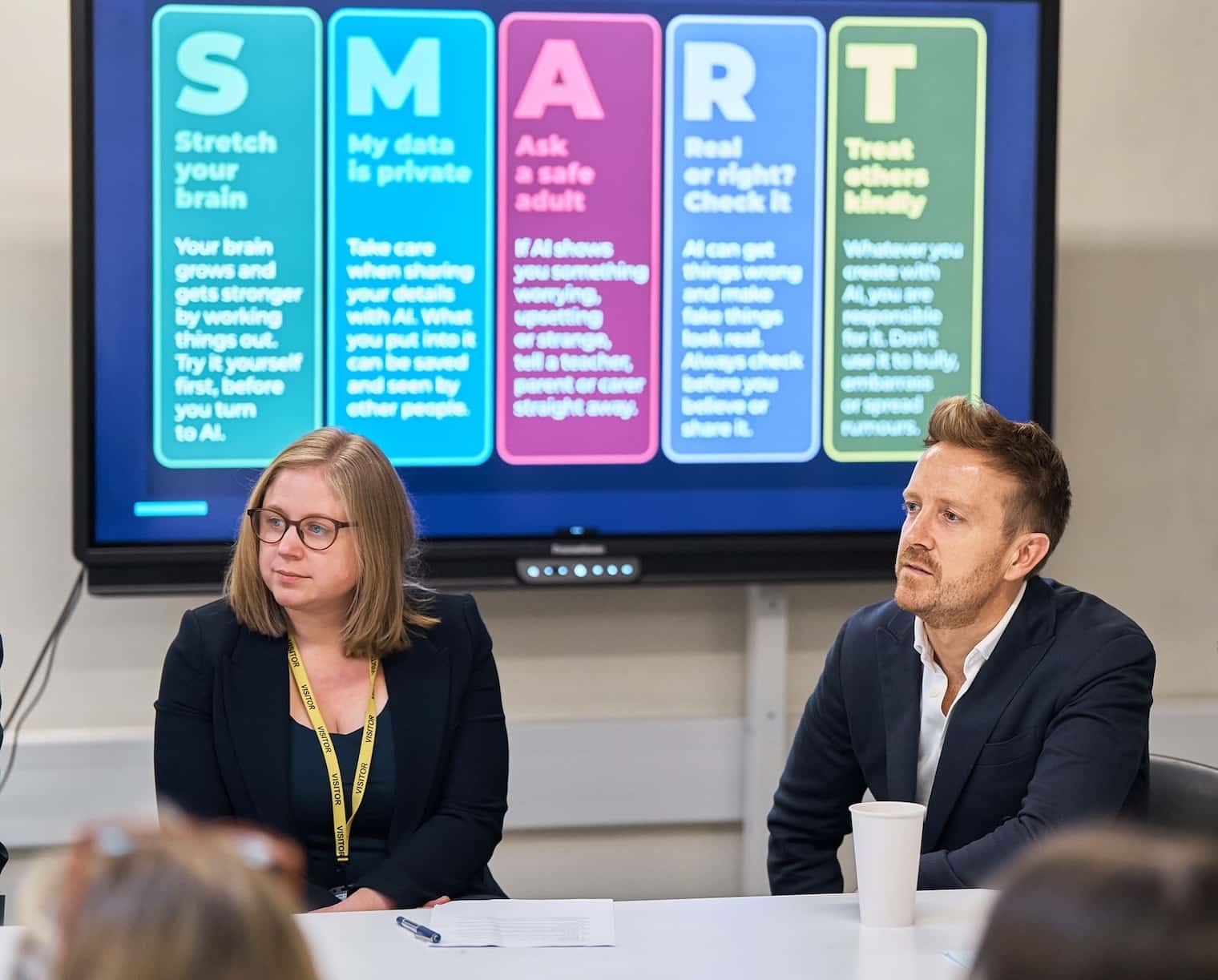
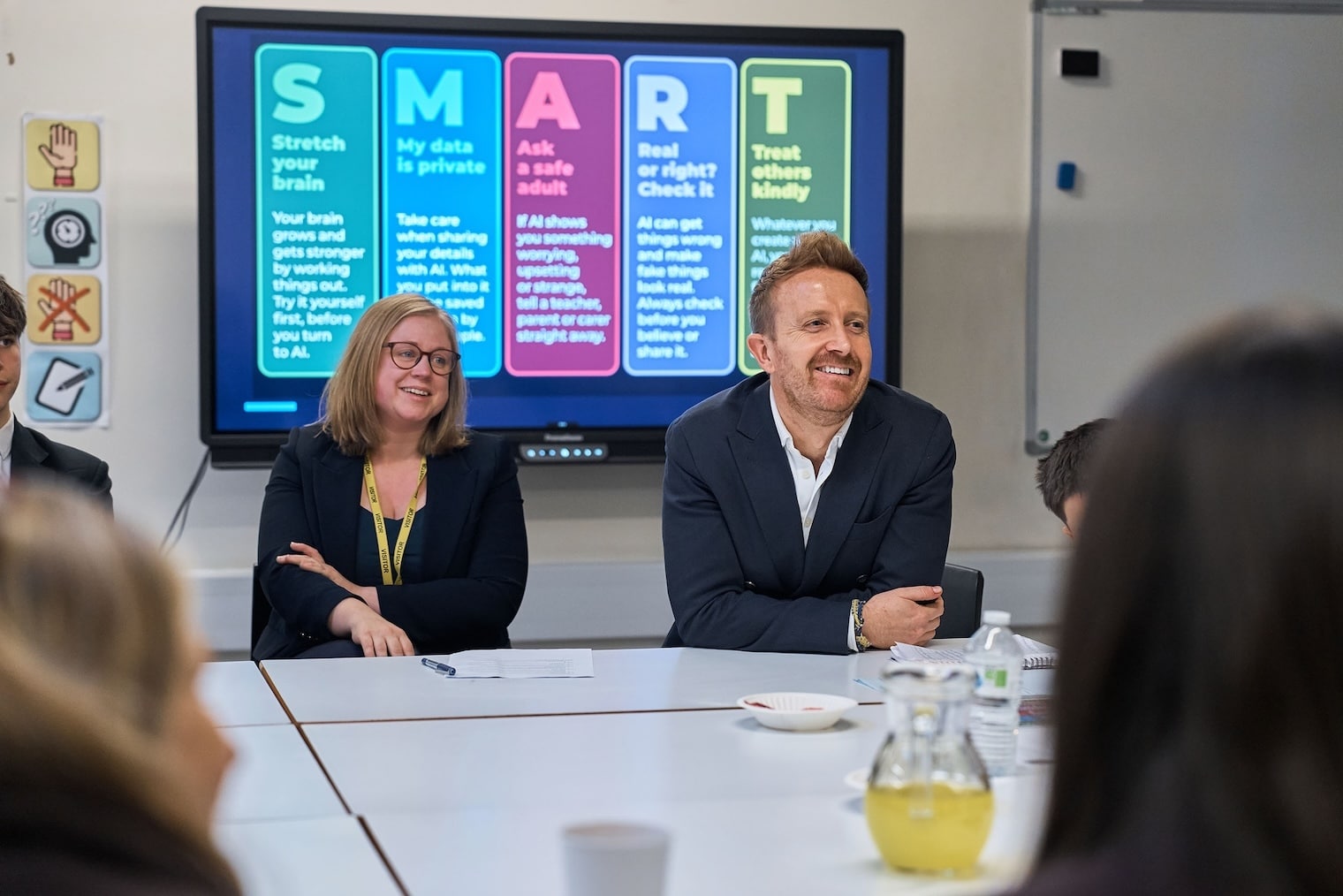
At its centre are five SMART habits:
S — Stretch your brain
M — My data is private
A — Ask a safe adult
R — Real or right? Check it
T — Treat others kindly
The habits encourage children to think for themselves, protect their personal information, question AI-generated content and seek support when something worries them.
The accompanying NSPCC supported assembly is designed to help teachers explain what AI is and encourage pupils to explore it thoughtfully. The poster also signposts children to Childline for support.
Ms Jarmy’s work leading a team of 30 teachers, builds on this classroom focus, contributing an education-led resource to a campaign that began as a family conversation.
Together, the resources aim to give teachers an accessible starting point for discussions about a technology already woven into children’s lives, from search engines and chatbots to games and creative tools.
Teachers can access the campaign poster and assembly resources through NSPCC Learning, with the teacher pack to follow early in the new year.
To find out more about the campaign, please visit NSPCC and read more about this in the The Times featured article ‘What do school children hope and fear about AI’.

Children are already using AI, in and out of the classroom. Our job is to help them become thoughtful, critical users, not passive ones.
Related posts
See all posts